Community Programs
Community programs play a vital role in supporting our shelter by connecting pets with people, promoting responsible pet ownership, and providing resources that help keep animals safe, healthy, and in loving homes. Together, these programs strengthen the bond between our shelter and the community.
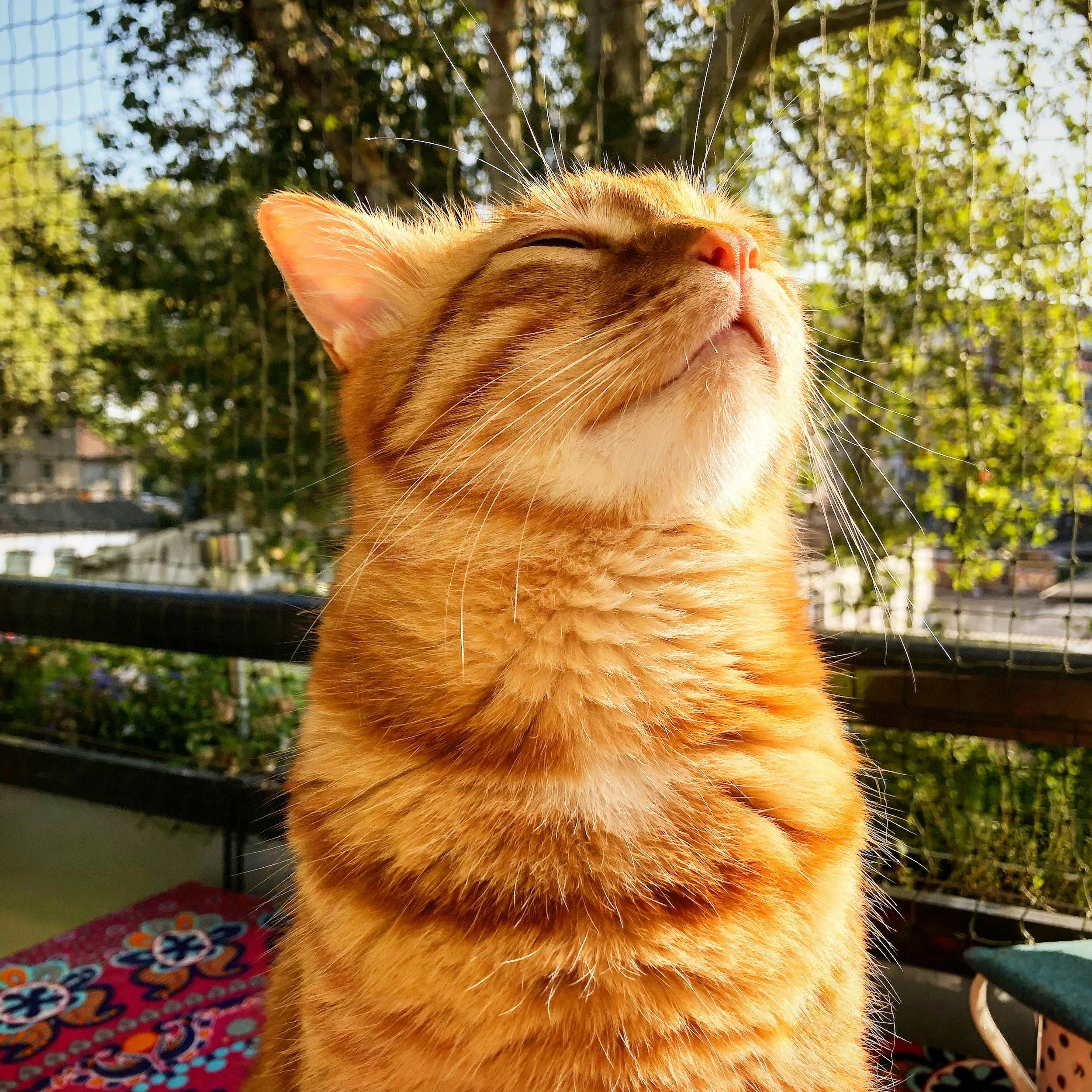
Cat Program
This program is a collaborative initiative designed to humanely and effectively reduce Darlington County’s community cat population while improving the health and welfare of free-roaming cats.
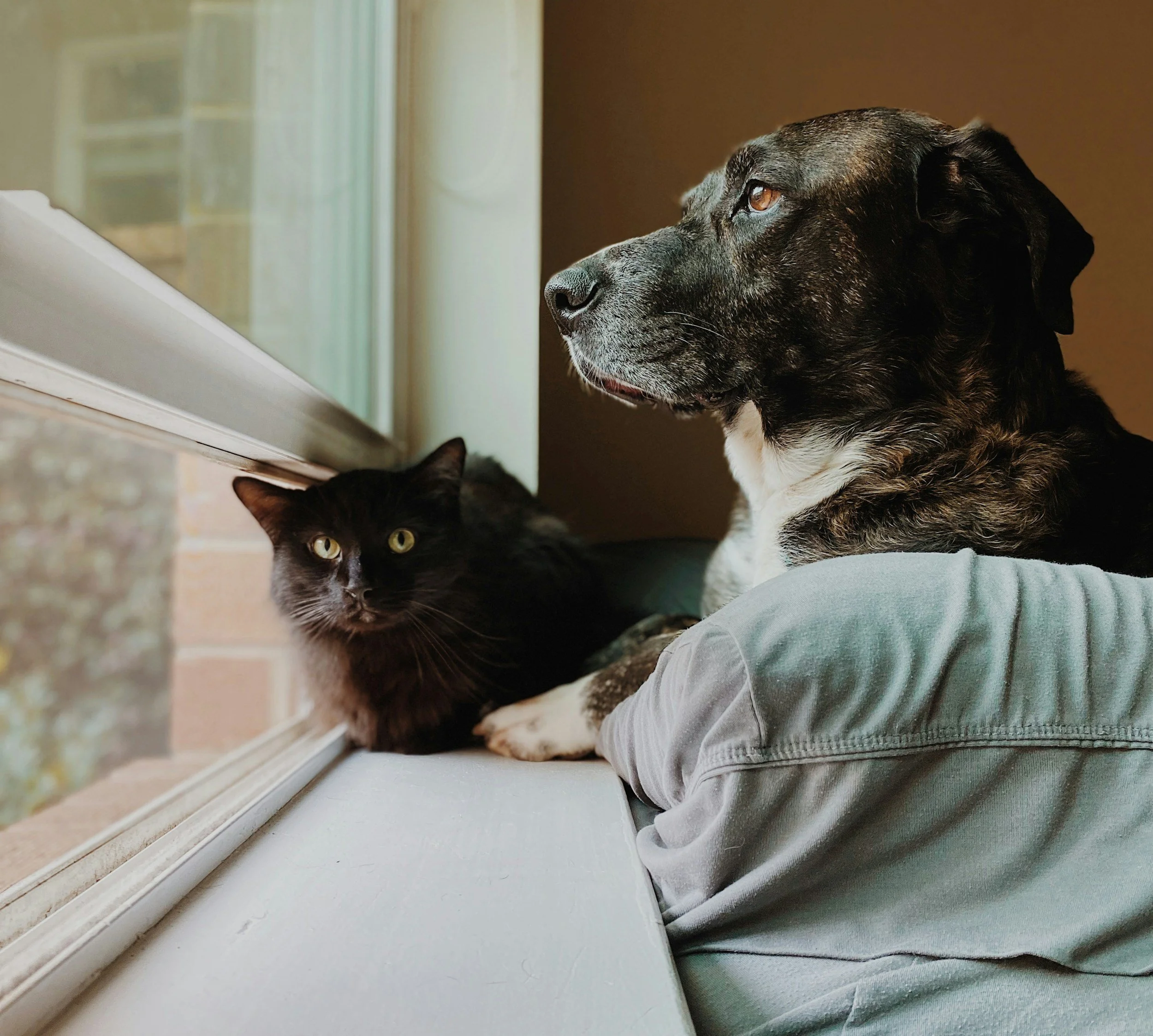
Outreach Program
This program supports access by residents of Darlington County for proper veterinary care and timely spay/neuter of their pets, who cannot otherwise afford appropriate veterinary services.
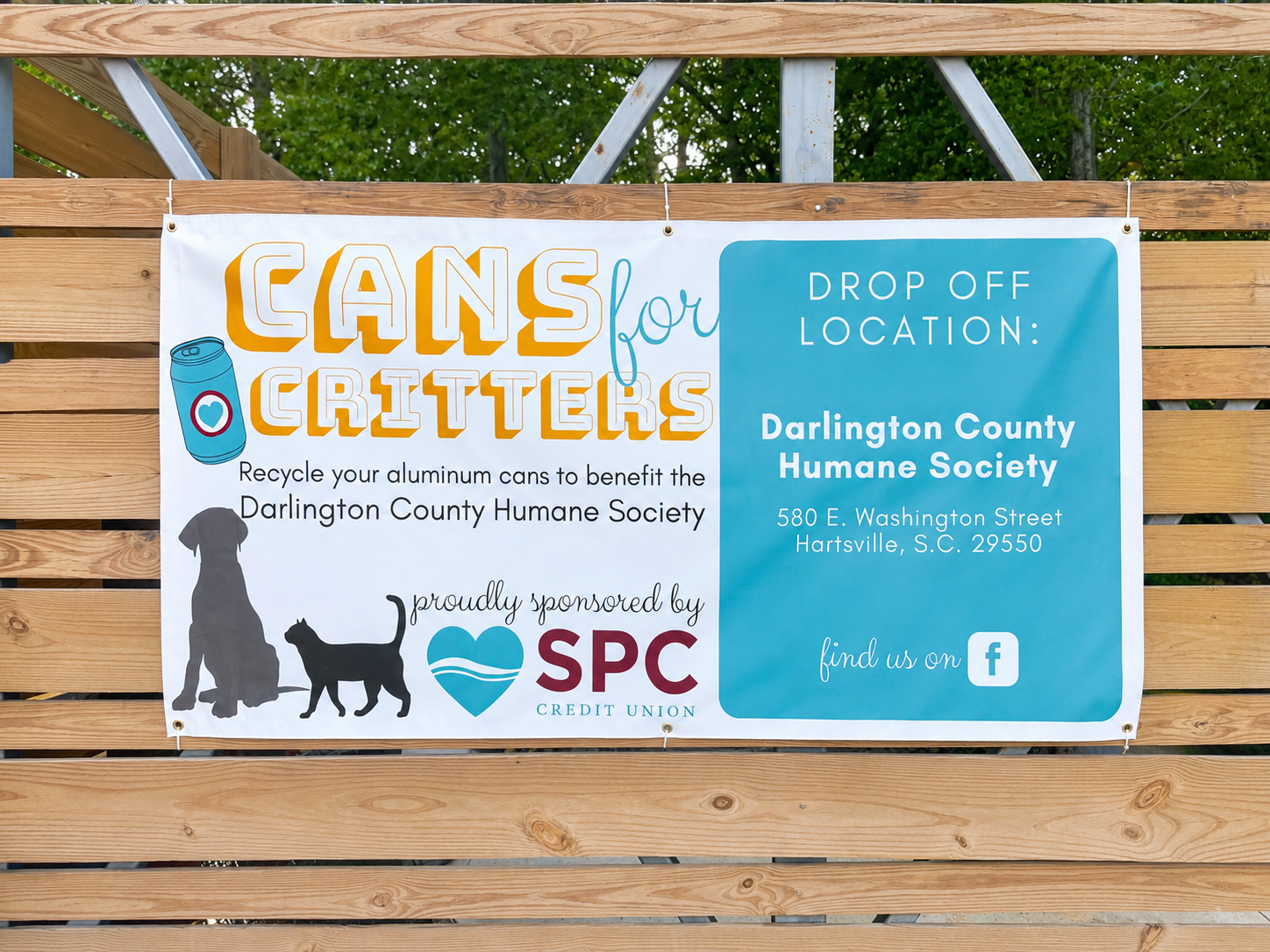
Cans For Critters
Cans for Critters is a recycling program that supports the Darlington County Humane Society. The program recycles aluminum cans to raise funds for the needs of our DCHS babies.
Cat Program
-
For more information, please contact the DCHS Community Cat Program Coordinator:
Call: 980-277-0704
Email: CommunityCats@darlingtonhumane.org -
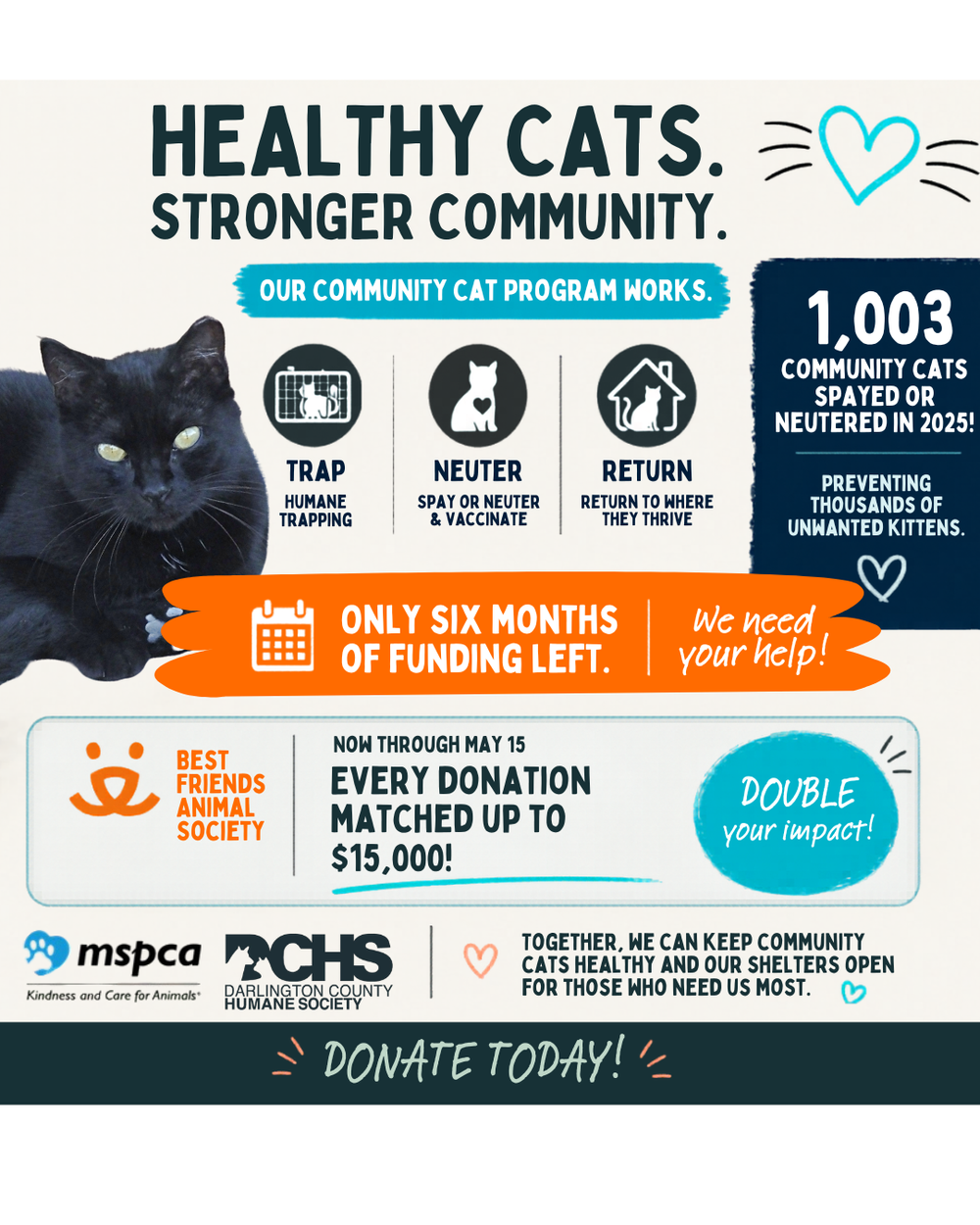
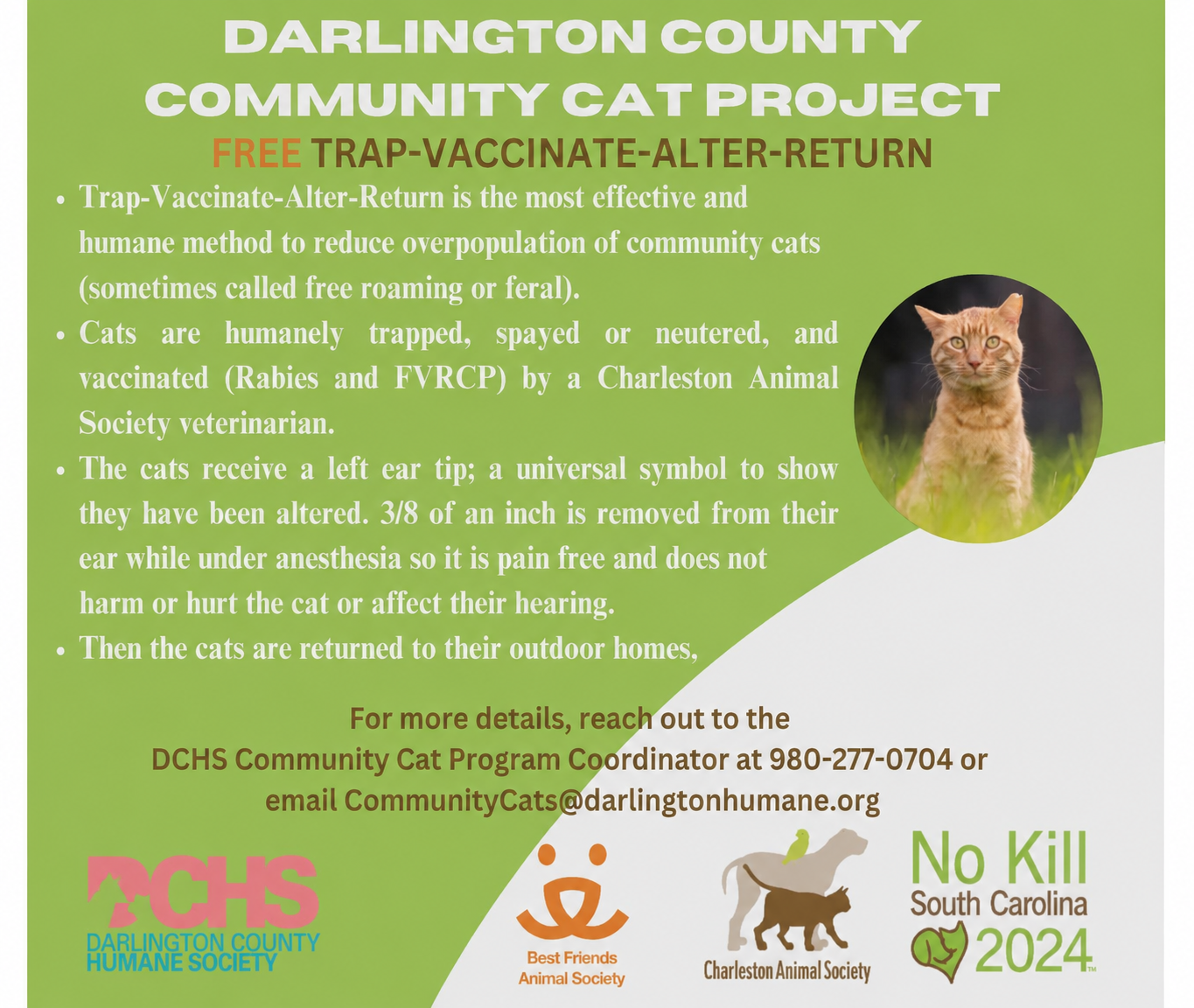
Through the Best Friends Animal Society Shelter Collaborative Program and No Kill South Carolina, Darlington County Humane Society partners with Charleston Animal Society, the Florence Area Community Cat Program, and MSPCA-Angell to bring TVAR (Trap-Vaccinate-Alter-Return to Home) to Darlington County.
This proven approach helps stabilize community cat colonies, reduces nuisance behaviors, and prevents future litters—saving lives and conserving shelter resources.
-
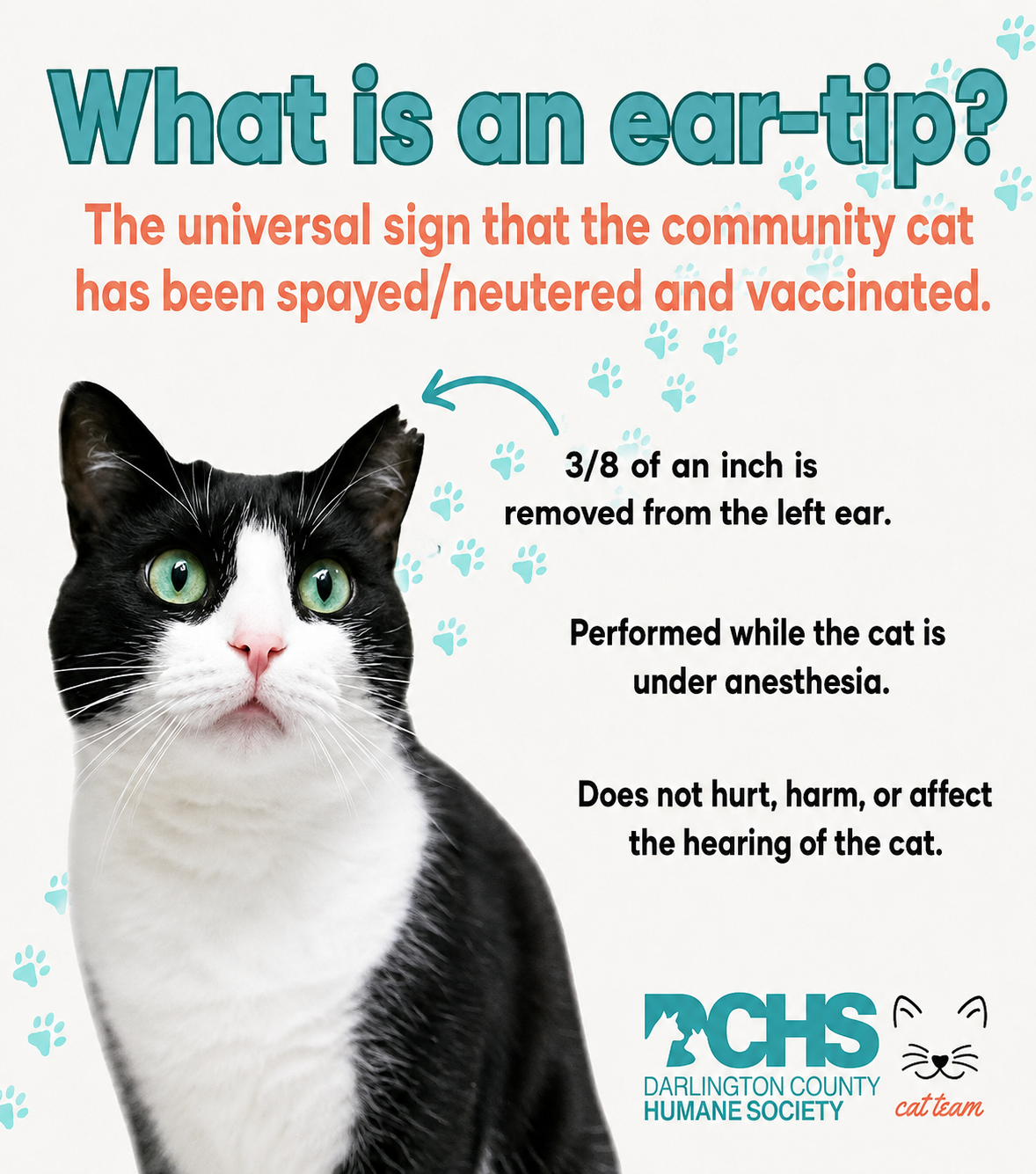
A community cat, also known as a free-roaming cat, is any cat that lives outdoors or spends most of its time outside. Most community cats live in small groups called colonies, typically made up of three to five cats.
TVAR (Trap-Vaccinate-Alter-Return to Home)—sometimes referred to as TNR (Trap-Neuter-Return) or SNR (Stray-Neuter-Return)—is a humane and effective population-reduction strategy.
Community cats are:
Humanely trapped
Vaccinated and spayed or neutered
Returned to the outdoor location where they were originally found
Cats are not housed in the shelter, which reduces stress on the animals and frees shelter space. By sterilizing cats at a high volume before they can reproduce, TVAR gradually and sustainably reduces the community cat population.
The South Carolina Animal Care and Control Association (SCACCA) fully supports the National Animal Care and Control Association (NACA) position on community cats, which states:
“It is the position of NACA that indiscriminate pick up or admission of healthy, free-roaming cats, regardless of temperament, for any purpose other than TNR/SNR [TVAR], fails to serve commonly held goals of community animal management and protection programs and, as such, is a misuse of time and public funds and should be avoided.”
TVAR is encouraged by the American Veterinary Medical Association and is considered a best practice by the Association of Shelter Veterinarians, American Association of Feline Practitioners, Humane Society of the United States, ASPCA, and Best Friends Animal Society.
As of 2023, 29 of South Carolina’s 46 counties have implemented a TVAR program.
Outreach Program
-
Spay and neuter greatly reduces the number of unwanted animals in our county, further reducing those at risk of occupying our county animal shelter. Community Outreach is an all-volunteer ran program available to owners of pets in our county, separate from services of homeless animals that are housed at the shelter.
-
The Darlington County Humane Society (DCHS) Community Outreach program assists owners and their pets. Only submit an assistance application for a pet you own. Separate applications must be submitted for each individual pet.
Can For Critters
-
How long? What volunteers?
-
You can drop off your cans in the fenced in section labeled “Cans for Critters” around the very back of the Darlington County Humane Society.
-
Clean, aluminum cans, Crush them. Trash bag.